Ordinary Devotion:
Kristen Holt-Browning on Crafting Dual Narratives Across Time

I recently had the pleasure of interviewing debut novelist Kristen Holt-Browning about her remarkable first work of fiction.
A poet and editor with a Master’s degree in English from University College London, Holt-Browning brings a nuanced voice to contemporary literary fiction. Her writing demonstrates a keen awareness of how historical narratives can shed light on present-day struggles. As an editor of academic monographs and scholarly works for university presses, she brings unique insight to the world of academia that features prominently in her fiction.
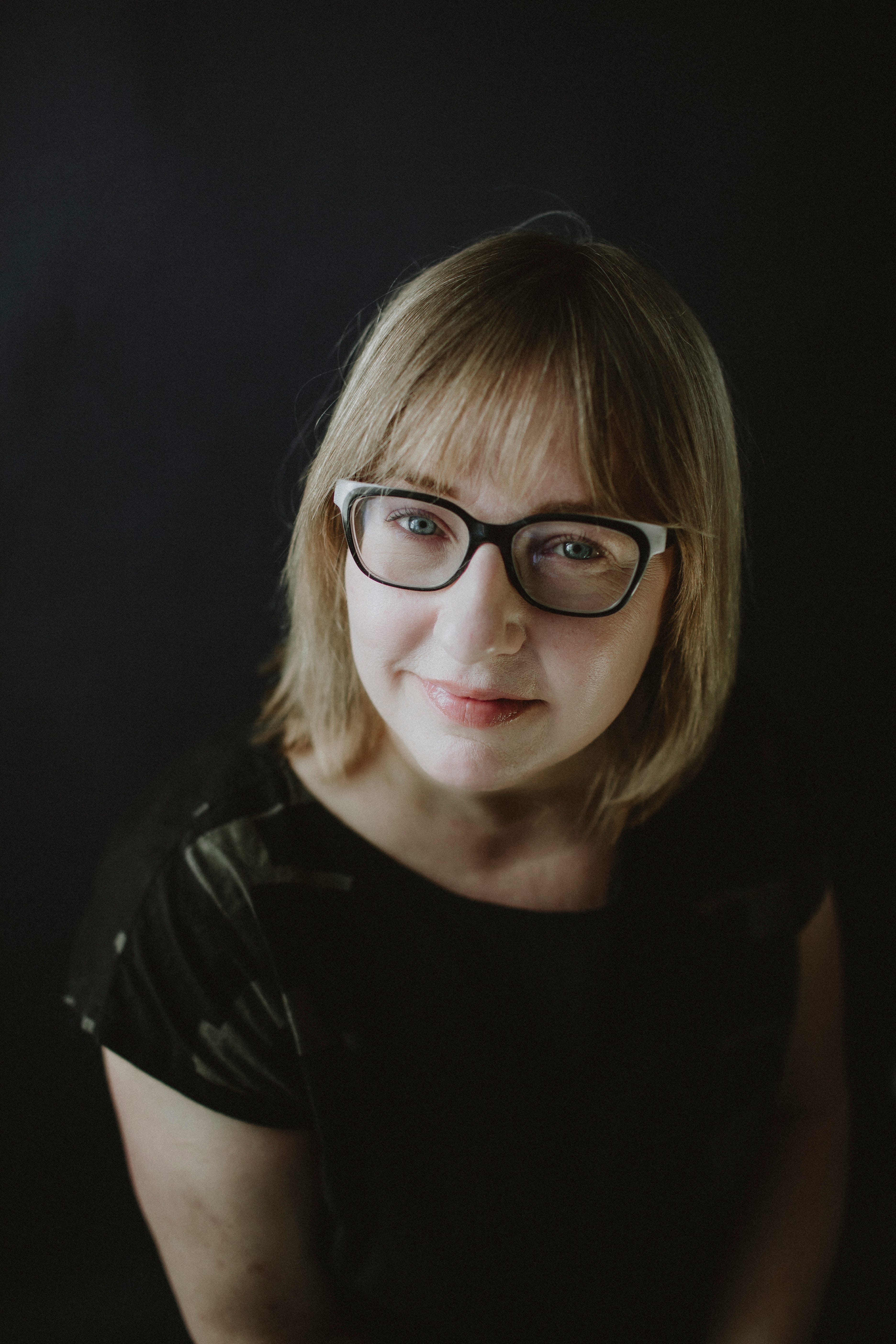
In her debut novel, Ordinary Devotion (Monkfish Book Publishing, 2024), Holt-Browning masterfully weaves two narratives separated by centuries: a medieval girl enclosed with an anchoress and a contemporary scholar grappling with grief and career uncertainty. While the novel will appeal to fans of meticulously researched historical fiction, Holt-Browning’s approach is marked by striking intimacy, creating characters whose struggles resonate across time. As she notes, "I'm interested in how we shape our specific, unique lives within and against the historical backdrop of the time and society we live in."
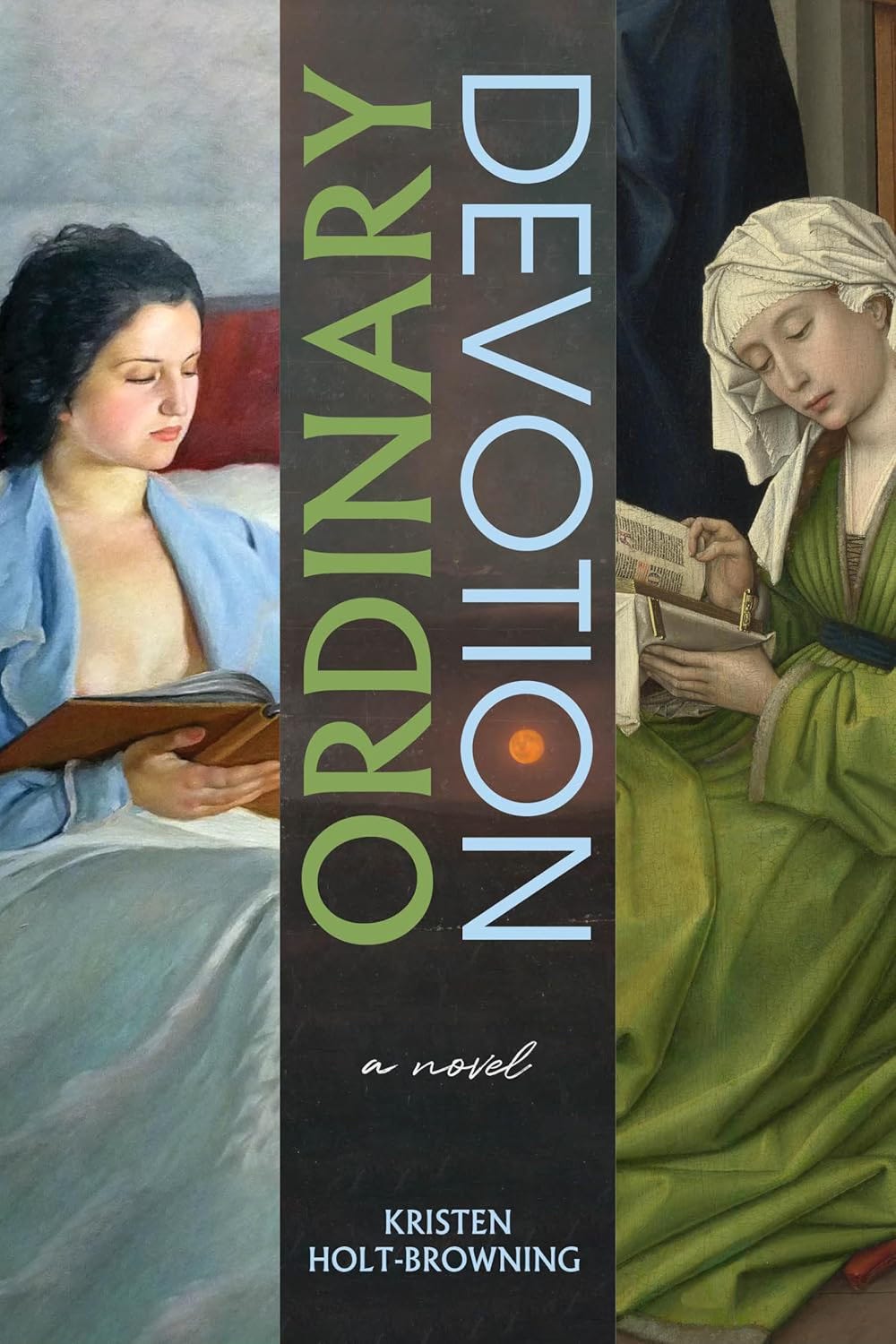
During our conversation, Holt-Browning reflects on the pandemic-era genesis of her novel, her research into medieval religious practices, and how her background in poetry influenced her approach to prose fiction. She also shares insights into crafting distinctive voices for her dual protagonists and exploring themes of female agency across different historical contexts.
Reading Ordinary Devotion, I was immediately struck by its lyrical prose and profound exploration of how women throughout history have carved out spaces for their own expression, whether through religious devotion, intellectual pursuit, or personal resilience. The novel is a remarkable achievement that marks Holt-Browning as an important new voice in contemporary fiction.
***
Jonathan Crain: Ordinary Devotion features a unique dual narrative that connects the 14th and 21st centuries through the shared experiences of two women. What inspired you to tell this particular story, and how did you develop the idea of connecting these two time periods?
Kristen Holt-Browning: Ordinary Devotion began several years ago as two entirely separate short stories: one about a girl enclosed with an anchoress; and one about an adjunct professor struggling with grief and career dissatisfaction. Both stories kept expanding and lengthening, but also not really going anywhere. I had no idea how to move them along in an engaging way, and they both felt kind of … flat. I put them both away about six years ago, but looked at them again during the depths of the Covid pandemic. Seeing them with fresh eyes more than a year after putting them away, it suddenly seemed so clear to me that these were a single story, two sides of the same coin of women’s struggles and ambitions. During 2020 and 2021, I didn’t feel inspired to start any new projects (and didn’t have the time or mental or physical space either, as both of my kids were home doing remote school), but I did feel able to play with splicing these two stories together, finding where they seemed to overlap and reflect one another, and using each to inspire the continuation of the other. I started to see how each narrative thread could be continued, both on its own terms, and in relation to the other narrative. So, while I started with two stories rooted in some of my personal interests—academia, women’s history, women’s ambition—I ended up with a single book that came together as a conversation with itself.
Jonathan Crain: The novel centers on the fascinating figure of the anchoress. For readers unfamiliar with this historical practice, could you explain what an anchoress is and what drew you to explore this subject in your writing?
Kristen Holt-Browning: An anchorite, or, if a woman, an anchoress, was a Christian who had themselves enclosed, in a cell or room attached to a church, permanently, as an act of extreme ascetic piety. The tradition originated with the “desert fathers” of ancient Christian history, but the practice seems to have become particularly popular (relatively speaking) with women in Western Europe in the medieval period. Priests would perform last rites on anchoresses when they were locked up in the cell, to show that they were, essentially, dead to the world. The anchoress couldn’t leave the cell, and planned to spend her entire life enclosed there. I was reading a book about the medieval mystic, musician, and nun Hildegard of Bingen, and it mentioned, in passing, that she may have been enclosed as a child with an anchoress. But there were almost no other details mentioned about what seemed, to me, like a really weird and notable life event. Who would do that to a child? And why? I pretty quickly realized that having two women—one a deeply religious ascetic, one a child—literally locked up together in a small space offered all sorts of intriguing literary possibilities!
Jonathan Crain: The novel contains meticulous attention to detail regarding medieval religious practices, social structures, and material culture. How did your research process inform the development of the novel, and what steps did you take to ensure historical accuracy while still crafting a compelling fictional narrative?
Kristen Holt-Browning: I was very concerned with writing something that was historically accurate enough so as to be believable, but not so beholden to historical accuracy as to be a lecture or a scholarly book. I’m not an academic, and I took literally one course in medieval studies as an undergraduate. I reminded myself often while writing that the point of the research was to support, not supplant, the fictional narrative. Adela and Elinor are completely fictional characters. Their specific attitudes, thoughts, and actions were made up by me. But, they were made up by me within the context of what people like them probably would have understood and believed during that period of time. In general, my process was to read a lot of academic research, and take notes on it while reading it, but then to put it aside while writing. If I wasn’t sure about a historical detail while writing—for example, what would the fireplace in the cell be like? Would they even have one?—I would write that detail in what I thought was the most accurate way, make a note in the manuscript to double check it later, and keep writing the story. I never wanted the story to sag under the weight of historic accuracy, and I never wanted the flow of the narrative to slow or stop while I checked my research. I hope, and like to think, that this approach contributes to an overall sense of momentum in the narrative, as well as a sense of the research supporting, rather than overshadowing, the story.
Jonathan Crain: Adela's character provides a nuanced perspective on the lives of anchoresses, challenging common assumptions about their isolation and motivations. What sources or historical accounts did you find most helpful in understanding the complexities of Adela's character and her decision to embrace this life?
Kristen Holt-Browning: I’m indebted to a book called Hermits and Anchorites in England, 1200–1500, edited by Professor E. A. Jones. It includes both translations of medieval and earlier writing on the anchoritic life, as well as essays by contemporary scholars on all aspects of anchorites, and situates them in the context of medieval Christianity, which I found very helpful. Reading both the original source texts and the current commentary helped me both with understanding the medieval mindset, and seeing how we might unpack that mindset, at least somewhat, today. I also found it very enlightening (and enjoyable!) l to read other novels about anchoresses: The Anchoress by Robyn Cadwallader, which follows an entirely fictional anchoress; and For Thy Great Pain Have Pity on My Little Pain by Victoria MacKenzie, which imagines the lives of the real-life anchoress oJulian of Norwich and the mystic Margery Kempe. These novels showed me different possibilities for approaching the anchoress from a fictional perspective.
Jonathan Crain: The novel explores the lives of three women, Elinor, Elizabeth, and Adela, who are separated by time but connected through their shared experiences and challenges. Could you talk about the significance of this trio and how you approached creating the dynamics between these characters?
Kristen Holt-Browning: Motherhood and mothering are key themes of Ordinary Devotion, and the idea of maternity is what really linked these three characters for me. Adela awkwardly attempts to be something of a mother figure to Elinor; Elinor is grieving her own recently deceased mother; and Liz is pregnant, about to become a mother for the first time. Adela and Elinor’s relationship is in some ways a dark-mirror version of the mother-child relationship: Adela sometimes seems motivated by care and concern for Elinor, but she is also a cold and reserved person, focused so much, as she is, on God and the afterlife. But there are moments, too, when Elinor mothers Adela, in a way, offering her comfort and support. And Liz, too, feels maternally toward Elinor, as she tries to learn as much as she can about Elinor. I see the relationships between these three women as variations on the theme of motherhood. On a more practical level, my desire to show how these women were caring for themselves and each other helped me shape the story, because their approaches to care for one another opened up a lot of plot possibilities, and opportunities for character development.
Jonathan Crain: Elizabeth's journey as a medieval scholar grappling with the demands of academia and the desire to explore new research avenues will likely resonate with many readers in similar fields. Did you draw on your own academic background and experiences while writing Elizabeth's story?
Kristen Holt-Browning: Only a little—I’m not an academic, and I’ve never worked at a university. But I’m a freelance editor, and a lot of the manuscripts I work on are academic monographs and scholarly works published by university presses. So that’s given me a familiarity with academic writing and research. I have a couple close friends who work in academia, and while they love their jobs, their experiences have disabused me of any notion of the ivory tower as a cloistered place untouched by workplace issues like bureaucracy; inefficiency; the influence of the market; or tensions between newer employees and the higher-ups. So I sort of collated together my secondary experience of academia, and my friends’ careers, as I wrote Liz’s story.
Jonathan Crain: Elinor is a young girl who becomes Adela’s assistant during the anchoress’s confinement. Elinor is necessarily also confined to fulfill that role. Elinor's transformation under Adela's guidance is a compelling aspect of the novel. How did you approach depicting the complexities of their relationship, particularly considering the power imbalance inherent in their circumstances?
Kristen Holt-Browning: The rigid social hierarchies of medieval society in Western Europe played a big role here. By setting Adela up as someone from the upper classes, and Elinor from the lower, I was able to heighten and emphasize the vast mental and material differences between them—and I was able, frankly, to set this whole novel in motion. A farm girl in medieval England simply would have no recourse if her father chose to lock her up with a noblewoman at that noblewoman’s request. This power imbalance is key to making the whole set-up feasible. It also helped me shape and plot Elinor’s gradual growth toward some degree of what we would now call self-agency, and a sense of self. Elinor is able to eventually come to understand who she is what she wants both in opposition to Adela, but also in terms of her begrudging admiration of Adela. I tried to keep in mind, while writing, that as a medieval young person, Elinor would simply not have the ability to speak up for herself, advocate for herself, or challenge Adela in any meaningful way at all. So I needed to use Elinor’s smallest actions—such as her deciding to build a fire or prepare a bath for Adela; or how she gradually speaks more confidently and openly to Joseph, the monk she befriends—to show the very gradual rise in her self-confidence. Without spoiling anything, I think that the final scenes between Adela and Elinor do illustrate how much Elinor has grown and changed in her time in the cell, by placing her in a position of relative strength, and almost as a maternal stand-in.
Jonathan Crain: Elizabeth's fascination with medieval literature and her desire to translate and share these works with others suggest a deep personal connection to the act of reading. Could you speak to the role of reading in your own life and whether this aspect of Elizabeth's character is drawn from your own experiences?
Kristen Holt-Browning: Well, I’m definitely a huge reader—what writer isn’t? I have been my entire life. Although I pretty much only read novels and poetry, I do read work that’s both very contemporary and very much not. I’m also someone who doesn’t travel a ton (I don’t actually even like travelling that much!), so I’ve leaned on books for access to other places for a long time. I used all of these personal inclinations in shaping Liz: although I’m not an academic, like Liz, I approach much of life through books, and I do truly see reading as one of our best few ways to reach people who lived a long, long time ago.
Jonathan Crain: The novel explores themes of faith, doubt, freedom, and the enduring power of human connection across time. Were there any particular themes or ideas you were particularly interested in exploring through the novel?
Kristen Holt-Browning: I’m interested in how we shape our specific, unique lives within and against the historical backdrop of the time and society we live in. Of course we all have some degree of agency, but it’s so dependent on when we live and where we live. So how does our sense of self develop and evolve in relation to our historical situation? I’m particularly interested in this tension as it plays out in the lives of women. Obviously women are vastly different and varied in their outlooks and opinions, but at least in Western history (I don’t feel remotely qualified to comment on Eastern traditions), women have generally been forced to live within patriarchal restrictions around their sexuality. So how do women manage to find ways to live meaningfully and as fully as possible (if they do at all?). This is of course a huge question that can’t be answered in a single way. Having two primary female protagonists (and a third one, in Adela, as well), gave me a few specific ways to come at this question from different historical timeframes and viewpoints.
Jonathan Crain: Both Elizabeth and Elinor experience moments of questioning their paths, considering alternative ways of living and contributing to the world. How do you see the novel addressing the theme of finding meaning and purpose in a world that often feels chaotic or restrictive?
Kristen Holt-Browning: The title, Ordinary Devotion, gestures toward this idea of how to find purpose in a world that can feel both, simultaneously, out of control and yet highly restrictive. No one person can find the perfect work/life balance (whatever that is), and no one person can change, save, or fix the world. And I don’t think we should even try to achieve those goals. Adela chooses such an extreme path, and I don’t present her as an example to follow, not at all (I really hope nobody comes away from the book thinking that!). Liz and Elinor, on the other hand, both attempt to focus on what is in front of them, and what they can control, whether it's carefully reading and poring over a book; making a fire to keep warm; managing to connect with just one or two students; or simply observing the light as it changes across a single day. This kind of ordinary devotion really can be enough.
Jonathan Crain: Given your background as a poet, how did your experience with poetry influence your approach to writing prose fiction?
Kristen Holt-Browning: The power of compression, and the ability of precise language to really elevate a scene: those are the two main ways in which writing poetry have shaped and, I hope, improved me as a prose writer. Personally, I think many of the novels I read are too long, and could have benefitted from some tightening and editing. I have a personal preference for shorter, tighter novels (but I get that lots of people like big, digressive novels!). And, of course there are plenty of good and great long poems, but in general, the poems I write tend to improve from cutting, refining, and polishing. Especially when I was writing the scenes set within the cell, I had to rely on distinctive, specific language and strong word choices to elevate what could have been very static and boring scenes. Elinor’s world is so constricted, that I leaned on language to emphasize every little thing she notices, and to show how her senses became sharpened in the cell, how little things like changes in light or a new food for dinner were so notable among the endless darkness of her world.
Jonathan Crain: The novel features shifts in style and perspective, including sections written in the present tense from Elinor's point of view. What led you to make these stylistic choices, and how do you think they contribute to the novel's overall impact?
Kristen Holt-Browning: I was very concerned with making sure that Elinor and Liz each had distinctive, recognizable voices. With Elinor in particular, I was aware of the fact that I wanted her to sound slightly foreign to a twenty-first-century ear, but I didn’t want to fall into the trap of using overly formal, stilted language to signify that her story was taking place in “ye olden days.” If anything, I wanted to collapse the distance between her and the reader as much as possible, while acknowledging that, to some degree, she must remain somewhat distant to us. So I made sure to avoid both contemporary slang and overly “old-timey” language, settling on a voice that was a bit more formal than ours, but not overly so. I also chose to write Elinor’s chapters in the present tense, and Liz’s in the past tense. I hoped that this would help emphasize the immediacy of Elinor’s plight, and create a sense of closeness between her and the reader. I also just liked the idea of doing the opposite of what might be expected: using the past tense for the present-day narrative, and the present tense for the historical narrative. Even if readers don’t pick up on the tense forms consciously (although you did!), I hope the tense choices work subconsciously to unsettle the reader’s ideas of what is past and what is present.
Jonathan Crain: The novel features several powerful moments that are likely to stay with readers. Without giving away any spoilers, are there any scenes or images you hope will resonate with your audience?
Kristen Holt-Browning: I hope the final scene of young Elinor is moving and meaningful for readers. I really wanted to leave her in a place of possibility. I didn’t want to write a novel where everything is tied up neatly at the end. Rather, I wanted to leave both Elinor and Liz in places where, although we don’t know how everything will play out for them exactly, we can see that they both have some good options before them, and the reader can visualize any number of positive outcomes for them.
Jonathan Crain: Now that the novel is complete, what do you hope readers will take away from their experience with Ordinary Devotion?
Kristen Holt-Browning: In keeping with the theme of “ordinary devotion,” my hopes are fairly ordinary and modest. I hope I can offer readers who choose to spend their (probably very limited!) free time with Elinor and Liz a moving and thought-provoking story that maybe exposes them to something new (how many of us know anything about medieval anchoresses, or purgatory?), and leaves them feeling inspired and touched by the stories of these very different women. For me, an ideal reading experience is both instructive (I want to learn something) and emotionally resonant (I want to spend time with characters who are interesting and whom I care about in some way).
Jonathan Crain: Would you like to tell us about any projects you’re currently working on or have planned for the future?
Kristen Holt-Browning: I’m currently working on a full-length collection of poems; I hope to finish revising and organizing them in the new year, and then looking for a publisher for that. I’ve also started drafting a new novel, although it’s very early going—all I can say about it for now is that it is also about two women, an older one and a younger one, but it takes place entirely in the present day. I need a break from historical research!
***
From her reflections on craft to her deep insights about faith and purpose, Holt-Browning proves herself an author adept at bridging historical distance with intimate understanding. Her work shows how the constraints of the past—whether in the form of physical barriers or societal norms—still resonate in contemporary life. Like the medieval anchoress's cell that features so prominently in Ordinary Devotion, her prose carves out a space where limitation fosters insight and confinement leads to unexpected freedom. With a lyrical yet precise style, historically grounded yet deeply personal, Holt-Browning reveals how, even across centuries, women's stories can illuminate universal truths about purpose, devotion, and the search for agency in a world often defined by restriction.
Thank you so much, Jonathan, for your thoughtful questions and continued support! I’m so glad you enjoyed the book.