Method and Moment: How Scientist-Author Sheri Singerling Builds Literary Worlds

In Neuen, the latest novel by Sheri Singerling, questions of genetic identity, ecological interdependence, and the illusion of freedom spiral into something much larger: a meditation on reality itself. A trained geologist with three degrees to her name, Singerling distills her science fiction drawing from years of academic rigor and quiet observation. "Science has taught me to be analytical, true," she explains, "but it has also taught me the importance of the story." For Singerling, the disciplines aren't in tension: "The best scientists are those that are creative and think outside the box."
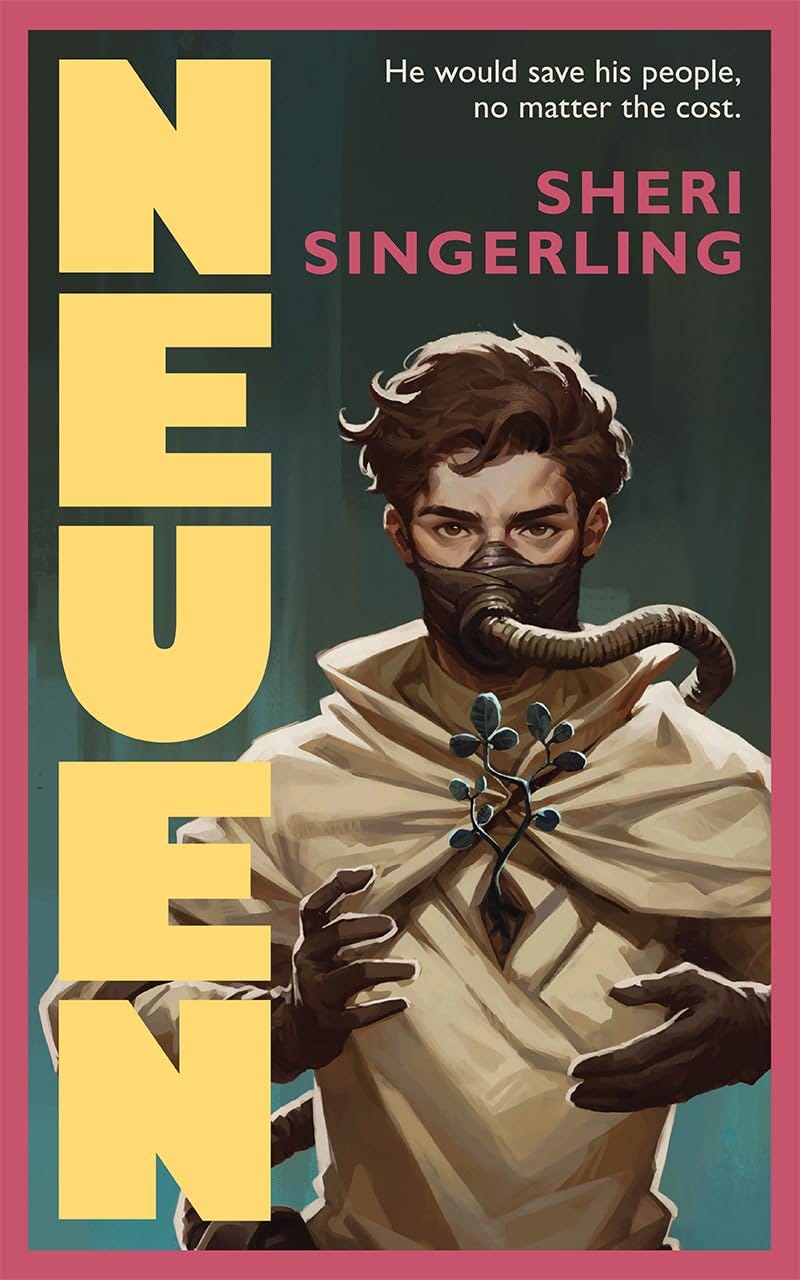
Set on a planet defined by a hauntingly slow rotation and oxygen-thin air, Neuen is not content to build a world—it builds a system. The planet's nomadic populations are biologically tethered to engineered flora, societal castes are determined by visible genetic "GLEtches," and history itself is suspect. Singerling's protagonist, Levi, is caught between duty and ambition, truth and taboo. His internal struggle mirrors the broader philosophical thrust of the Alfom shared universe, which Singerling has unfolded across her novels and short stories.
In Neuen, these themes converge in the story of Levi, a botanist whose discovery of forbidden genetic knowledge forces him to question everything his society believes about purity, control, and freedom. As he navigates increasingly perilous moral territory—both scientific and personal—the novel becomes an exploration of the dangerous allure of forbidden knowledge and the unintended consequences that follow when ambitious minds push against the boundaries they're not meant to cross.
"The shared-universe approach requires me to basically start each book from scratch," Singerling notes. "New characters. New locations. New world-building." This modular structure gives her room to explore a range of subgenres—from cyberpunk to science fantasy—while maintaining thematic throughlines. Among these are alienation, the architecture of knowledge, and the perennial human ache for belonging.
Yet what distinguishes Singerling's work is not only its conceptual ambition but its restraint. In Neuen, the grandeur of the speculative is often undercut by intimacy and melancholy. The planet's stark, shifting landscapes are less a canvas for spectacle than a reflection of dislocation. "I hope the planet will sit with them—its starkness, its desolation, its beautiful melancholy," Singerling says. "We are all on similar journeys into the unknown...towards an uncertain future."
The speculative scaffolding of Neuen—from engineered lung-plants to simulation theory—could easily overwhelm less disciplined writers. But Singerling grounds every revelation in emotional and scientific plausibility. Her approach to integrating hard science into fiction is refreshingly measured: "I like to give the backbone of the science without diving too much into the details," she explains. "I want my stories to feel real without too much arm waving."
For a writer who spends her days analyzing rocks and space dust, Singerling's fictional worlds are startlingly organic—rooted, paradoxically, in lived estrangement. Having relocated to Germany, she writes as both observer and outsider: "Being an immigrant has a strange effect on one's worldview," she reflects. "You are a perpetual outsider... But the beauty of that is you can see things from a different perspective, view events from afar, much like a narrator."
This displacement surfaces in her work's emotional architecture. "I do not consciously write with themes in mind," she admits, "but I do find myself straying to certain ones. Alienation. A desire for connection and belonging. A search for truth." These preoccupations—universal yet deeply personal—give weight to her speculative conceits.
Singerling projects her Alfom universe to span sixteen novels, driven by what she calls "one big question, the biggest of them all—the why. Why are we here?" Not every novel tackles this directly, she notes, "but the central ones... all touch on this to some extent. The final novel will aim to answer it." With Blessed is the Rot due later this year, she shows no sign of slowing down. But if Neuen is any indication, the journey ahead will be less about arrival than deepening the question.
Readers interested in following Sheri Singerling can find her on her website, Instagram, Bluesky Social, Facebook, and Goodreads.